Begin Your Sundarban Expedition from Canning
– The Closest Rail Gateway to India’s Largest Mangrove Forest
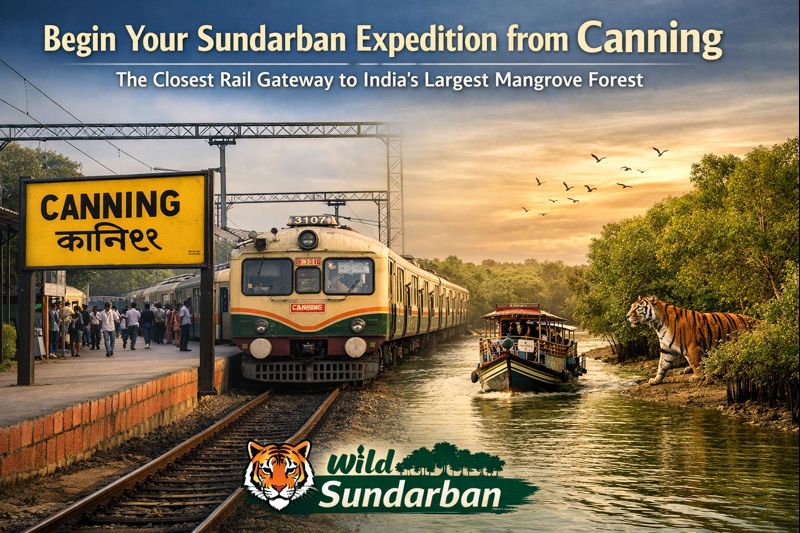
The Sundarbans represent one of the most ecologically complex and geographically fascinating regions of the Indian subcontinent. Recognized globally for its vast mangrove ecosystem, intricate river networks, and exceptional biodiversity, this deltaic landscape attracts travelers who seek meaningful encounters with nature rather than conventional sightseeing. Among all access points to this wilderness, Canning has emerged as the closest and most efficient rail gateway, making it the most practical starting point for a well-planned Sundarban expedition.
This landing page, curated by Wild Sundarban, presents a comprehensive, research-based guide explaining why beginning your Sundarban journey from Canning offers logistical, ecological, and experiential advantages. The content is designed for travelers, planners, and nature enthusiasts who value accuracy, depth, and responsible travel.
Understanding the Geographic Significance of Canning
Canning is situated in the South 24 Parganas district of West Bengal and lies on the fringe of the Sundarban delta. Historically developed as a river port during the colonial period, Canning was envisioned as a gateway to eastern trade routes. While its port ambitions never fully materialized, its strategic location near tidal rivers and mangrove channels has made it indispensable for modern Sundarban tourism.
What distinguishes Canning from other access points is its direct railway connectivity from Kolkata, combined with its proximity to motorable roads leading toward jetty points such as Godkhali and Jharkhali. This dual connectivity enables travelers to transition smoothly from urban transport networks to river-based exploration within a short span of time.
Canning as a Transitional Landscape
The journey from Kolkata to Canning itself marks a visible transition in landscape. Urban settlements gradually give way to agricultural fields, wetlands, and riverine zones influenced by tidal patterns. This transition prepares travelers mentally and visually for the unique ecological setting of the Sundarbans, where land and water constantly negotiate space.
Major Distances and Travel Orientation
Understanding distances is essential for efficient itinerary planning. Canning’s advantage lies in reducing unnecessary road travel, allowing more time to be spent within the forested delta.
- Kolkata to Canning: approximately 45–50 kilometers by suburban rail or road
- Canning to Godkhali Jetty: approximately 35–40 kilometers by road
- Canning to Jharkhali: approximately 45 kilometers by road
- Canning to core Sundarban forest zones (by boat from jetties): variable, depending on tides and route
By starting at Canning, travelers avoid longer detours associated with alternative gateways and enter the Sundarbans through routes that are both time-efficient and ecologically immersive.
How to Reach Canning
Canning is exceptionally well-connected, making it suitable for both domestic and international travelers arriving via Kolkata.
Rail Connectivity
Canning is connected to Kolkata via the Sealdah South section of the Eastern Railway suburban network. Frequent local trains operate throughout the day, offering a reliable and economical mode of transport. This rail link is particularly beneficial for travelers who prefer predictable schedules and minimal transit disruptions.
Road Connectivity
Canning is accessible by road through well-maintained state highways and district roads. Private vehicles, pre-arranged transfers, and commercial transport services operate regularly between Kolkata and Canning. From Canning, road journeys continue toward designated jetty points that serve as boarding locations for Sundarban boat safaris.
Why Begin a Sundarban Expedition from Canning
Starting a Sundarban expedition from Canning is not merely a logistical choice; it is a strategic decision that enhances the overall quality of the journey.
Reduced Travel Fatigue
Shorter road distances translate into less physical strain, especially for senior travelers and families. This allows guests to engage more actively in forest activities such as boat safaris, village walks, and wildlife observation.
Extended River Exploration
By minimizing road travel, itineraries originating from Canning allow more time on the rivers and creeks of the Sundarbans. River-based exploration is the essence of the region, offering insights into mangrove ecology, tidal dynamics, and animal behavior.
Operational Reliability
Canning functions as a dependable staging point with access to supplies, local expertise, and transport coordination. This operational stability is essential in a region where weather and tides play a critical role in daily planning.
Important Points to See During a Sundarban Tour from Canning
A Sundarban expedition is defined not by monuments, but by landscapes, ecosystems, and subtle encounters with wildlife.
Mangrove Forest Corridors
The dense mangrove corridors form the backbone of the Sundarbans. These forests act as natural barriers against cyclones and tidal surges while supporting a complex food web. Observing the root systems, salt-adaptation mechanisms, and canopy structures offers a deeper understanding of coastal ecology.
Tidal Rivers and Creeks
The Sundarbans are shaped by the ebb and flow of tides. River channels such as Matla, Bidya, and Gomdi reveal how freshwater and saline systems interact. Boat safaris through narrow creeks provide opportunities to observe reptiles, birds, and estuarine life.
Watchtowers and Forest Zones
Designated watchtowers located within forest zones serve as observation points for wildlife and birdlife. These structures are strategically placed near water sources and natural clearings, increasing the likelihood of sightings while maintaining visitor safety.
Rural Island Settlements
Village visits offer insights into human resilience in a challenging environment. Traditional livelihoods such as fishing, honey collection, and crab farming demonstrate sustainable coexistence with nature under strict ecological constraints.
Wildlife and Biodiversity Context
The Sundarbans are globally renowned for their biodiversity. The region supports numerous species adapted to brackish water conditions and tidal habitats.
While the Royal Bengal Tiger remains the most iconic inhabitant, the forest is equally significant for estuarine crocodiles, spotted deer, wild boar, water monitor lizards, and an extensive range of resident and migratory birds. Dolphin sightings in wider river channels further enrich the ecological experience.
Staying Options Near the Sundarbans
Accommodation options near Sundarban entry points range from standard lodges to premium eco-resorts. Properties are typically located on the mainland or on inhabited islands outside core forest zones, adhering to environmental regulations.
Standard and Budget Properties
These accommodations focus on basic comfort, clean facilities, and proximity to jetties. They are suitable for short stays and travelers prioritizing exploration over luxury.
Mid-Range Eco-Resorts
Eco-resorts emphasize sustainable architecture, local cuisine, and guided experiences. They often include cultural programs and interpretive sessions on Sundarban ecology.
Premium Nature Retreats
Premium properties combine comfort with responsible tourism practices. These stays are designed for travelers seeking privacy, curated experiences, and enhanced service standards while respecting environmental limits.
Best Time to Visit the Sundarbans from Canning
Seasonal planning is critical for a safe and rewarding Sundarban journey.
Winter Season (October to March)
This is considered the most favorable period. Temperatures remain moderate, humidity is lower, and wildlife activity is relatively higher. Birdwatching opportunities peak during this season due to migratory species.
Pre-Monsoon Season (April to Early June)
The pre-monsoon period experiences higher temperatures but offers increased chances of wildlife sightings near water bodies. Travelers should be prepared for warm conditions and strong sunlight.
Monsoon Season (Mid-June to September)
Monsoon transforms the Sundarbans into a lush, dramatic landscape. However, heavy rainfall, strong tides, and operational restrictions make this season suitable primarily for experienced travelers and research-oriented visits.
Responsible Travel and Conservation Awareness
The Sundarbans are an ecologically sensitive region governed by strict conservation laws. Travelers are encouraged to follow guidelines related to waste management, wildlife interaction, and local customs. Responsible tourism ensures that the region remains viable for future generations while supporting local communities.
Why Choose Wild Sundarban for Your Journey
Wild Sundarban specializes in thoughtfully designed Sundarban journeys that balance exploration, education, and ecological responsibility. Each itinerary is crafted with attention to seasonal conditions, safety protocols, and experiential depth.
For travelers seeking additional insights into regional planning and itinerary structures, resources such as Sundarban Tour
and Sundarban Travel offer supplementary perspectives on Sundarban tour planning.
Beginning your Sundarban expedition from Canning is a decision rooted in geography, efficiency, and experiential quality. As the closest rail gateway to India’s largest mangrove forest, Canning offers a seamless transition from city life to tidal wilderness. With careful planning, responsible travel practices, and expert guidance, a Sundarban journey starting from Canning becomes not just a tour, but a meaningful exploration of one of the world’s most extraordinary natural landscapes.